The Permission to Stop Perfecting: Why 'Good Enough' Is a Budget Strategy
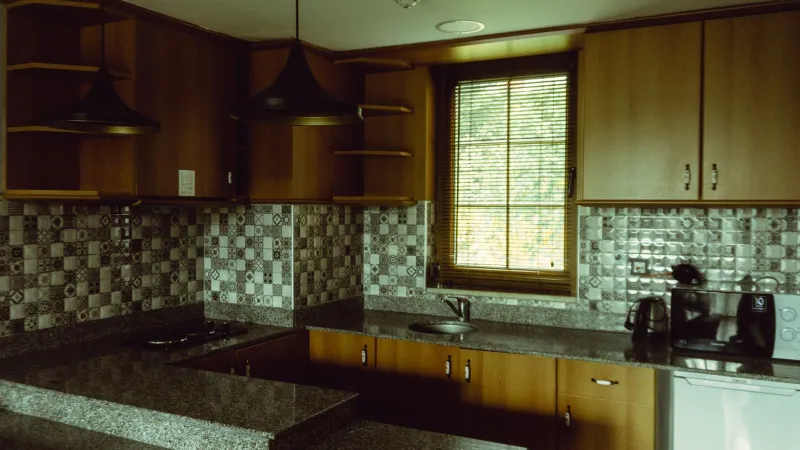
There is a moment in almost every renovation when the room looks nearly right. The walls are painted, the floor is down, the light is coming through the window. And then the doubts arrive. The grout line is a millimetre off. The sockets are not quite symmetrical. The paint colour is lovely at noon and slightly green at seven in the evening. Suddenly, a finished room feels like a list of failures.
This is the perfection tax, and in UK homes it is one of the quietest budget killers around. It rarely arrives as one big extravagant decision. It comes as a hundred small ones: a bespoke cabinet instead of a standard one, a second tile sample, a custom paint mix, a replacement tap because the first was fine but not thrilling. None of these choices is unreasonable on its own. Together, they can stretch a project by thousands and delay it by months.
Perfection is expensive because it is open-ended
A good-enough decision has a finish line. A perfect decision often does not. You can keep researching, comparing, revisiting and refining until the room is no longer a room but a mood board with a mortgage. The problem is not that high standards are bad. The problem is that perfection has no natural stopping point, and renovation budgets do.
In older UK housing stock, this matters even more. Walls are rarely straight, floors are rarely level and nothing is quite square. Chasing flawless alignment in a Victorian terrace or a 1930s semi can mean paying for specialist work to solve problems that nobody will notice once the sofa is in. Sometimes the most sensible approach is to work with the character of the building rather than trying to correct every imperfection.
Instagram is a poor project manager
Social media has made it easy to compare your mid-build chaos with someone else’s carefully styled reveal. What you do not see is the cost, the hidden work, the staging, the borrowed furniture or the fact that the photograph was taken from the one angle where the radiator does not show. A beautiful image is not a specification. It is a mood.
Comparison is especially tempting when you are tired, dusty and making decisions at speed. But the goal of a renovation is not to produce a photograph. It is to produce a home that works for the people living in it. If a room is warm, practical and pleasant to be in, it is already doing something more useful than looking flawless online.
Choose your non-negotiables
Good enough does not mean careless. It means deliberate. Before you start choosing finishes, decide where the money genuinely needs to go. For most households, that means layout, heating, insulation, electrics, plumbing and anything that is difficult or expensive to change later. Those are the non-negotiables.
Then choose one or two places to make a real statement: a beautiful worktop, a well-made front door, a generous window seat, a piece of art, a lovely light fitting. The rest can be sensible, standard and perfectly acceptable. A mid-range tap in a well-planned kitchen will not ruin your life. A badly planned kitchen with a designer tap will still be a badly planned kitchen.
Put 'good enough' into practice
Start with standard sizes where you can. Off-the-shelf cabinetry, common tile formats and widely available fittings are usually cheaper, quicker to replace and easier to live with. Accept small inconsistencies in an old house. A little filler and a steady hand can hide more than you think. Paint tired joinery instead of replacing it. Keep the original doors if they are sound. Live with a gap in the furniture plan rather than buying something rushed.
Set decision deadlines, too. Give yourself three options, choose one by Friday and move on. If you are stuck between two nearly identical shades of white, that is a sign that either will be fine. The energy you save can go into the decisions that actually change how the house feels.
A buffer is for surprises, not upgrades
A contingency fund is not a secret shopping budget. It is there for the rotten joist, the unexpected rewiring or the leak that appears the day after the plaster dries. If you spend it on upgrading a perfectly good worktop because the first one felt ordinary, you have removed your safety net for a cosmetic gain. Good enough protects the buffer.
Enjoy the home before it is finished
The most liberating part of embracing good enough is that it lets you move on. You can hang pictures before the final snagging list is complete. You can invite people round while the hallway still needs a second coat. You can live in the room and learn what it actually needs, rather than guessing from a catalogue.
Renovation is not a test of taste. It is a practical, messy, human process of making a home work better. Aim for warm, functional and quietly pleasing. Leave a little room for imperfection. Your budget, your schedule and your sanity will thank you.